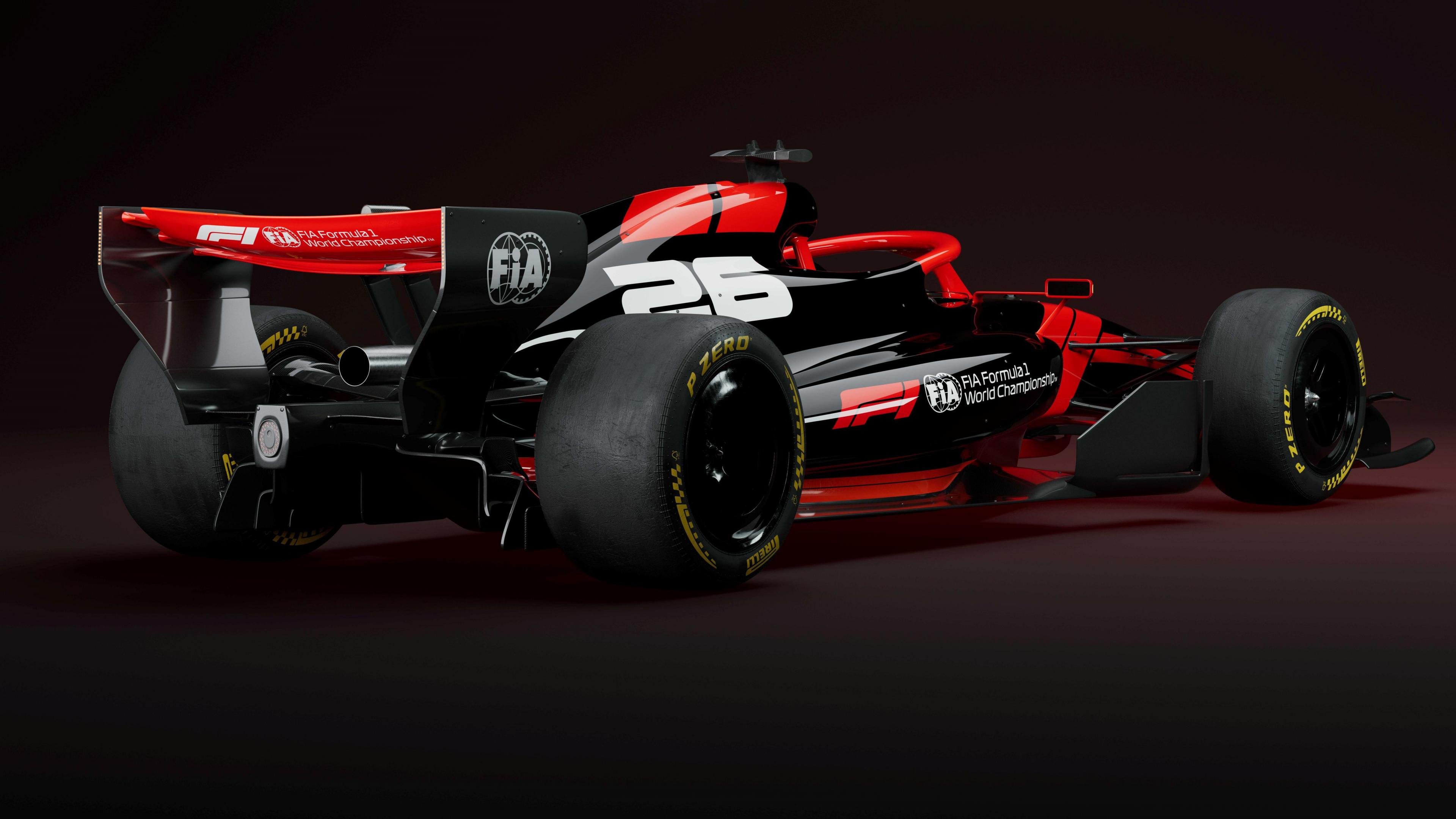
The 2026 cars are designed to be smaller, nimbler and more environmentally friendly relative to present-day cars.
F1 has revealed the simplified terminology that will be used to describe the intricate details of its upcoming 2026 technical rules.
The racing series is implementing what is arguably the most significant regulation change in its competitive history for the 2026 campaign, featuring new chassis and engine rules and the compulsory introduction of eco-friendly fuels.
The revised engines, which keep the hybrid V6 layout, boast a substantially higher energy storage, driving key advancements in the cars' aerodynamics.
Throughout races, competitors will tactically deploy ERS energy – including during flying laps – to extract the peak performance.
Broad surveys were conducted with a diverse audience, including long-time followers and newcomers, to understand which phrases would aid comprehension of the main elements of the 2026 changes.
The key objective was to render a set of intricate new areas of the sport as accessible as possible for the widest audience.
Consequently, initial designations for some systems – such as "alphabetical mode names" for the adjustable aero – have been discarded in favor of descriptive names that clearly indicate the actual function of the system.
Exploring the New Tech
Regulators explain that competitors will have greater control to choose strategies regarding power usage, regeneration, and saving energy.
The 2026 rules feature a series of modes that will be shown on broadcast screens to improve the fans' insight of the strategic duel.
- Overtake Mode: This replaces the existing Drag Reduction System. It provides a burst of extra electrical energy accessible when a driver is within one second the car ahead to facilitate an pass.
- Boost Mode: This is a driver-operated battery discharge from the ERS that can be utilized during offensive or defensive moves. It provides the pilot full engine and battery energy at the click of a switch.
Both of these strategic tools will have to be deployed strategically, as the total energy is restricted.
- Active Aerodynamics: Both the front and rear wings adjust their angles – opening on the high-speed sections for low aerodynamic resistance and higher speed, and angling down in the corners for optimal cornering performance.
- Energy Harvesting: Cars can recharge the energy store with power recovered from braking, or during partial power application at the end of straights or in certain corners where only partial power is applied.
What's Changing on the Cars?
The next-generation machines will be more compact and lighter compared to the 2025 spec, with a distance between axles reduced by 200mm to 3,400mm, width cut by 100mm – down to 1,900mm – and the minimum weight lowered by 30kg.
Cumulative downforce is anticipated to be reduced by approximately 15-30%, although constructors will naturally regain performance as they refine their designs.
Drag has been cut by 40%. The cars will feature moveable wing elements – front and rear wings will open on the straights to improve speed and enhance velocity and click back into place for maximum cornering performance.
Pirelli tyres will retain 18-inch wheel rims, but the tyres themselves will be narrower, by 25 millimetres on the front axle and three centimetres on the rear.
2026 Engine Regulations
The new power units will have an near-equal balance in power produced by the internal combustion engine and the battery and motor, a rise from about 20% electrical in the current formula.
The energy recovery system is simplified through the removal of the Motor Generator Unit – Heat, the complicated and costly device that recovered energy from the turbo.
Every car on the grid will be required to run on carbon-neutral fuel, manufactured from biomass or synthetic production methods.


